
The Coming Fighter Aircraft Decision
See The Simons Foundation Canada's Arctic Security Briefing Papers for information on military policies and practices in the Arctic region by Ernie Regehr O.C., Senior Fellow in Arctic Security and Defence at The Simons Foundation Canada.
The Coming Fighter Aircraft Decision
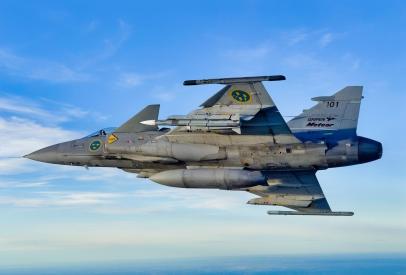
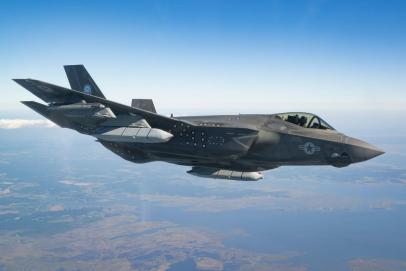
Sooner or later, and for the third time,[i] Ottawa will make its final decision on fighter aircraft to replace the current F-18, now that the Swedish Gripen E is back as an option along with the American F-35. The decision will probably have more to do with managing Canada-US relations and Canada’s industrial involvements than with either the relative merits of the two aircraft, or what might best serve Canada’s long-term peace and security needs, especially beyond our borders. While “red carding” risks have emerged as a concern, the greater challenge is twofold: 1) to face the inconvenient truth that the destructive power of military might is these days rarely leveraged to resolve conflicts and usher in sustainable security; and 2) to find the resolve to deploy military and diplomatic resources to prevent rather than prosecute wars.
A political decision
Some argue that politics should be kept out of the decision process, with a recent CBC News headline declaring there is “no place for politics” in the cockpit.[ii] But the decision won’t be made in a cockpit. It will be made in the halls of Government by politicians, and leaving politics out of politicians’ decision-making would be a dereliction of their duty. Politicians have the responsibility of putting it all together – beside the costs, they obviously need to consider national defence requirements and whether or which fighters are most likely to best serve that end. The have to take into account relations with our major military power neighbours (the US and Russia), and they should envision new ways to interact with Europe and the world beyond to contribute meaningfully to international peace and security.
Ottawa can’t escape a politically fraught choice among what have become essentially three options – the F-35, the Gripen, or a mix of both.
While official Canada is still making up its mind, Canadians seem to have decided – and they clearly prefer the Gripen. Only 13 percent favour going ahead with the F-35 as the only Canadian fighter, while 43% favour making it exclusively the Gripen, and another 29% favour an F-35/Gripen mixed fleet.[iii] Reporting and analyses generally assume that the Canadian Armed Forces (CAF) leadership leans heavily towards the F-35.[iv]
Canada has already ordered 16 F-35s, but it’s not locked into buying all 88 as earlier intended. A former strategic planning director for DND’s material group told the Hill Times that, though the Defence Department is now preparing infrastructure to receive F-35s, adjustments for other fighters could be made, and that Canada might also have the option of selling the F-35s it has on order to somebody else.[v]
Two North American roles
The public, as do the politicians, ultimately depends on experts and operators to credibly define the technical characteristic and merits of the F-35 and Gripen, but there are broad profiles that emerge from their analysis.
The F-35 is typically lauded for its relative stealth characteristics and especially for being more effective in high intensity armed conflict environments. It is generally said to have a heightened capacity to penetrate through an adversary’s air defence systems and for destroying adversary air attack and defence systems and infrastructure. After one F-35 famously crashed in Alaska due to a frozen hydraulic line in its nose landing gear, its suitability for Arctic duties may be further questioned.[vi]
The Gripen E meanwhile is said to be well suited for long-range intercepts, for operating from minimally equipped sites with shorter or damaged runways, for northern operations, and with much less maintenance time required (thus greater availability). The Gripen reportedly also has significantly lower operating costs.
While the F-35[vii] is regularly described as the world’s best-connected aircraft and seamlessly integrates into North American and NATO military operations, the Gripen has also been demonstrated to be interoperable with NORAD and NATO forces. And if it ends up, as seems increasingly likely, a mixed fleet, it won’t be a first for Canada, having operated a mix of CF-100, CF-101, and CF-104 fighter aircraft in the Cold War, before switching to the current CF-18.
Whatever aircraft are finally acquired, in North America they will be used in two main roles by the CAF.
Defending continental airspace
Though we now live in a climate of heightened strategic tension, some things have changed very little. There is still no current military threat to North American airspace, and Russian military aircraft patrols near North American/Arctic shores, now sometimes accompanied by Chinese military aircraft, remain occasional (unlike in Europe and the European Arctic where the pace of encounters has grown more intense). In the North American zone, any Russian or joint patrols stay, as they always have, well within international airspace, and in 2023 Canadian Lt. General Alain Pelletier told the House of Commons defence committee that, on average, NORAD does about seven intercepts of Russian military aircraft annually, “primarily in the Alaska area.”[viii] Since then the pace of those operations has picked up. NORAD does not routinely report numbers, but the American Stars and Stripes magazine reports that in some recent years it has been as high as 15.[ix] Since most happen adjacent to Alaska, only some of the intercepts are likely to involve Canadian aircraft.
That’s a definite uptick, but the unchanged nature and significance of such patrols and intercepts is illustrated by a March 4, 2026 NORAD interception, off the coast of Alaska, of two Russian TU-142 surveillance and anti-submarine-warfare aircraft – four engine turboprops derived from the TU-95 strategic bomber. The NORAD operation involved six fighter aircraft (two US F-35s, two US F-22s, and two Canadian F-18s) and five tankers for air-to-air refuelling (four US KC-135s and one Canadian CC-150). Here’s how the NORAD press release characterized the incident[x] (no word on the likely green house gas emissions in the encounter):
“The Russian aircraft remained in international airspace and did not enter American or Canadian airspace. This Russian activity in the Alaskan ADIZ (air defence identification zone) occurs regularly and is not seen as a threat.”
In other words, it was for both sides a routine, and daresay, welcome training exercise.
Through coastal and Arctic radars and other sensors, frontiers are monitored and the fighter force is meant to be at the ready to mount basic defences against limited attacks into North American airspace – which would now likely involve hypersonic and cruise missiles on conventional attack. That does require ongoing vigilance, but in peacetime there are no direct encounters, and the general consensus is that there is currently no external threat to North American airspace.
Aid to civil authorities
The other role continues NORAD’s aid to civil authorities in peacetime monitoring (to our collective good fortune, that’s the only kind NORAD has known) of frontiers to identify and, when called upon, intercept unauthorized civilian flights approaching or entering into North American airspace. When questionable approaches to Canadian airspace are not resolved – such as not having filed a flight plan, straying from a flight plan, suspicion of carrying contraband, and so on – interceptors can be dispatched to guide or force the offending aircraft to land.
An unusual example was the March 18, 2026 scrambling of NORAD fighters, Canadian F-18s and American F-16s and KC-135s, to escort two commercial aircraft to their landing at Trudeau airport near Montreal. Police then arrested two persons linked to what was described simply as a security incident.[xi]
NORAD also monitors and enforces adherence to internal areas of Temporary Flight Restrictions. For example, Canadian aircraft intercepted a civilian aircraft in Kananaskis, Alberta which had violated the temporary flight restriction over the area during the June 2025 meetings of the G-7.[xii] NORAD does not report statistics on civilian aircraft interceptions either.
Supersonic jet fighters, especially 5th generation stealth fighters, are hardly the most suitable or cost-effective aircraft for that domestic mission, or even for intercepting Russian or Chinese military aircraft. As reported in Hill Times,[xiii] the US Commander of NORAD (who also commands USNORTHCOM) recently told American Senators that, “frankly, sir, we don't need fifth-gen to defend our borders.” He told the US Senate Committee On Armed Services[xiv] he preferred what he referred to as “modernized” fourth generation fighter aircraft (sometimes referred to as 4.5 generation) for North America. He said fifth-generation aircraft like the F-35 should be for “overseas, where their stealth air to ground weapons and penetration capability are needed.”
More than a decade ago, a Canadian analyst suggested that interceptions of small commercial aircraft could best be carried out by slower, low flying aircraft. An example given was a Brazilian made turboprop – at about one-tenth of the cost of a supersonic fighter, thus making it possible to procure enough to station them in locations where most needed.[xv] Peacekeeping or peace-support missions might also be well-served by that kind of small aircraft in environments in which advanced anti-aircraft capabilities are not a factor.
A 2014 paper by the Defence Department’s research group, Defence Research and Development Canada, pointed out that, as the CBC reported,[xvi] a maximum of 36 operational fighter would be required for NORAD, describing anything beyond that to be “in excess of current requirements. The report also said “there is no hard minimum requirement for the NATO commitment.”
Canadian fighters for Europe?
A question Canadians should be asking is, why Canada’s contributions to NATO emphasize fighter aircraft, given that Europe already boasts large fleets of its own fighters?
According to publicly available databases on global fighter aircraft inventories,[xvii] European NATO members operate some 1,800-2,100 fighter aircraft, compared to Russia’s 900-1,050, while the United States operates 2,600-2,700. Numbers for Russia vary more than for NATO and the US due to the opaqueness of Russian data. For example, one source puts the Russian total at 1,560, but then indicates that many of those are no longer serviceable and sets the “core flightworthy fleet” at 660. Definitions of “fighter aircraft” vary and can include certain bomber aircraft as well.
But the overall picture is of a European NATO inventory of fighter aircraft that is at least twice that of Russia’s. That isn’t surprising, since Europe has emphasized fighter aircraft production through companies like Saab,
Airbus, BAE Systems, and Dassault. And when the NATO tally includes North America, the alliance is able to field well over four times as many as Russia (for neither NATO nor Russia, would all counted aircraft be available for European operations). If the concern, entirely legitimate, is that Europe can no longer rely on the US, the European NATO/Russia fighter balance is still substantially in Europe’s favour. It is also clear that Canada would be able to muster only a marginal fighter force for European deployment – perhaps a symbol of Canada’s transatlantic solidarity, but not operationally consequential.
The Ekos poll that showed Canadians favouring the Gripen did not include the options of choosing fewer fighters, or even none at all. In the present strategic climate the latter finds few takers, but it is worth remembering that just over a decade ago, foregoing fighter aircraft was a thinkable option. At the time, at least some defence experts and former officials known as committed advocates for expanding Canadian military capacity could and did suggest that Canada didn’t really need fighter aircraft.[xviii] That was, to be sure, another time – among other things, a strategic context that was perhaps more open to innovative thinking than is today’s.
Even so, Canada’s commitment of military capacity to European NATO has never really been fighter centric.[xix] Canadian contributions currently include the deployment of about 2,000 military personnel with a range of equipment that includes artillery and electronic warfare through its leadership of NATO Multinational Brigade in Latvia. Sea-based support includes rotational deployments of naval vessels and divers for the NATO Mine Countermeasures Group.[xx] Support for the NATO Standing Maritime Groups[xxi] is offered through rotational ship and helicopter deployments, and anti-submarine warfare commitments in the North Atlantic and Baltic Seas involve frigates, maritime patrol aircraft, underwater sensors in the Arctic, and planning towards submarines and related armaments.
Instead of maintaining an ongoing and costly capacity to make symbolic, marginal contributions to European air combat forces, or to American or NATO expeditionary campaigns, Canada could shift its air contributions to Europe, for example, to tactical and strategic airlift capabilities, making a more tangible difference to NATO. The same aircraft could be available for UN peacekeeping operations as well. Continue reading...
Ernie Regehr, O.C. is Senior Fellow in Arctic Security and Defence at The Simons Foundation Canada; Research Fellow at the The Kindred Credit Union Centre for Peace Advancement, Conrad Grebel University College, University of Waterloo; and co-founder and former Executive Director of Project Ploughshares.
[i] In 2010 the Conservative Government announced the procurement of the F-35, without the benefit of competitive bidding. In 2015 the Liberals promised that if they formed Government, Canada would not buy the F-35. They did form Government in 2015 and the F-35 was off the table, but a few years later, in 2019, it included the Lockheed Martin F-35 in the invitee list for its new competition of candidates to supply the next Canadian fighter. In 2023 the Liberal Government announced the F-35 as the winner of the competition and subsequently Ottawa entered into a contract to acquire a tranche of 16 as an initial order. But that final decision on the F-35 was suspended (thought not the 16-plane order) in March 2025 when Prime Minister Carney announced a fresh review of the contract, with the Swedish Gripen now also under consideration.
[ii] Laura Clementson, David Common, “No place for politics in F-35 cockpits as Canadian fighter jet pilots get ready to train at US base,” CBC News, 08 February 2026.
[iii] “Canadians Favour Gripen over F-35,” EKOS Politics. 17 December 2025. https://www.ekospolitics.com/index.php/2025/12/canadians-favour-gripen-over-f-35/
[iv] With much written comparing the F-35 and Gripen. The following are among the articles consulted:
Joey Attariwwala, “SAAB Gripen E Canada – Fighter Jet,” 2021 (Vol. 27, Issue 2) Cover Story.
Murray Brewster, “The Golden Dome is where Canada’s F-35 debate and Trump’s Greenland threat meet,” CBC News, 31 January 2026.
Bea Castaneda, “The GlobalEye: Sweden’s Answer to Modern Airborne Surveillance,” The DefensePost, 05 December 2025.
Clement Charpentreau, “Canada weighs mixed fighter fleet, US warns F-35 cuts could impact NORAD, Aerotime, 29 January 2026. https://www.aerotime.aero/articles/canada-weighs-mixed-fighter-fleet-us…
Rob Huebert and Jamie Tronnes, “Cancel the F-35? JAAS 39 Gripen Fighter would cripple Canada’s Air Force, for National Security Journal,” MacDonald Laurier Institute, 08 December 2025.
John Ivison, “Sources say Ottawa considering Swedish jets over F-35s for half of fleet,” The National Post, 28 January 2026. https://www.winnipegsun.com/john-ivison-sources-say-ottawa-considering-swedish-jets-over-f-35s-for-half-of-fleet/article_667f2c2a-3e20-4307-b9bc-1cf3ebfb11ac.html
Harrison Kas, “F-35 or Gripen? Canada’s Fighter Jet Dilemma, Explained.” The National Interest, 30 January, 2026.
Miles Keaton, “Canada’s Fighter Jet Choice: Why the Gripen Beats the F-35,” Canada Bulletin, 12 December 2025.
Daniel Leblanc, “F-35 beat Gripen fighter jet 'by a mile' in 2021 Defence Department competition,” CBC News, Last Updated: November 28, 2025. https://www.cbc.ca/news/politics/f-35-gripen-dnd-competition-9.6992167
Thomas Newdick, “Saab GlobalEye Set To Challenge Boeing E-7 As Canada’s New Radar Plane, The War Zone, 28 May 2025. https://www.twz.com/air/saab-globaleye-set-to-challenge-boeing-e-7-as-canadas-new-radar-plane
Eric Reguly, “Sweden’s Saab offers to build entire GlobalEye military surveillance plane in Canada” Globe and Mail, 18 November 2025.
“Saab Gripen Dual Fleet Vision Gains Traction in Canada,” Aero-News Journal, 06 February 2026. https://www.aeronewsjournal.com/2026/02/saab-gripen-dual-fleet-vision-gains.html
“SB ready to offer GlobalEye for Canada’s Airborne Early Warning and Control program,” Canadian Defence Review, 30 December 2025.
Leni Spooner, “Canda’s Fighter Jet Choice Is No Longer Just bout Jets, Between the Lines: Kitchen Table Politics, 02 February 2026. https://lenispooner.substack.com/p/canadas-fighter-jet-choice-is-no
Scott Taylor, “US envoy is making Canada’s F-35 decision a no-brainer,” The Hill Times, 04 February 2026.
[v] Neil Moss, “Keep on going as nothing has changed,” 01 April 2026. https://www.hilltimes.com/2026/04/01/keep-on-going-as-nothing-has-changed-dnd-prepares-for-f-35-fleet-despite-ongoing-review/497773/
[vi] United States Air Force Aircraft Accident Investigation Board Report, F-35A, T/N 19-5535 https://www.pacaf.af.mil/Portals/6/documents/3_AIB%20Report.pdf?ver=z-QJglR9Qm7slupMlo6zeA%3d%3d
[vii] Albert Kho, Christopher E. Penney, and Carleigh Busby, “The Life Cycle Cost of Canada’s F-35 Program – A Fiscal Analysis,” Office of the Parliamentary Budget Officer, 23 November 2023. https://www.pbo-dpb.ca/en/publications/RP-2324-018-S--life-cycle-cost-canada-f-35-program-fiscal-analysis--cout-cycle-vie-programme-f-35-canada-une-analyse-financiere
Highlights of the report’s findings of costs for a fleet of 88 aircraft:
- The total estimated cost of Canada’s F-35 program is $73.9 billion.
- Development phase costs are estimated at $0.2 billion.
- Acquisition phase costs are estimated at $19.8 billion.
- Operations and Sustainment phase costs are estimated at 53.8 billion.
- Disposal phase costs are estimated at $0.2 billion.
[viii] House of Commons Standing Committee on National Defence (NDDN), 17 February 2023. https://www.ourcommons.ca/documentviewer/en/44-1/NDDN/meeting-51/evidence
[ix] Joseph Ditzler, “NORAD intercepts third Russian surveillance plane near Alaska in less than a week,” Stars and Stripes, 25 August 2025. https://www.stripes.com/theaters/us/2025-08-25/norad-intercepts-russia-aircraft-alaska-18871195.html
[x] “NORAD detects and tracks Russian aircraft operating in the Alaskan Air Defense Identification Zone,” NORAD Press Release, 04 March 2026. https://www.norad.mil
[xi] Joe Lofaro, “Fighter jets escort Montreal-bound flights after ‘security incident’; 2 men arrested,” 18 March 2026. https://www.ctvnews.ca/montreal/article/flights-grounded-at-montreal-international-airport-due-to-bomb-threat-faa/
[xii] “NORAD intercepts and lands plane safely after air restriction violation,” RCMP Press Release, 15 June 2025. https://rcmp.ca/en/g7/news/2025/06/norad-intercepts-and-lands-plane-safely-after-air-restriction-violation
[xiii] Neil Moss, 01 April 2026.
[xiv] Statement and testimony of General Gregory M. Guillot, USAF Commander, United States Northern Command and North American Aerospace Defense Command, at US Senate Committee on Armed Services, 19 March 2026. chrome-extension: www.armed-services.senate.gov/imo/media/doc/03-19-2026_full_transcript…
[xv] Paul T. Mitchell, “How to get more air force for the dollar,” The Ottawa Citizen, 12 October 2010.
[xvi] Lee Berthiaume, “”Canada not required to provide minimum number of jets to NATO: report, CanadianPress/CBC News, 04 August 2016. https://www.google.com/search?q=government+2016+decision+that+Canada+needed+enough+fighter+aircraft+to+meet+NORAD+and+NATO+requirements+simultaneously.&oq=government+2016+decision+that+Canada+needed+enough+fighter+aircraft+to+meet+NORAD+and+NATO+requirements+simultaneously.&gs_lcrp=EgZjaHJvbWUyBggAEEUYOTIHCAEQIRiPAjIHCAIQIRiPAtIBCTU3NTA0ajBqN6gCCLACAfEFCXIhWUHmhCg&sourceid=chrome&ie=UTF-8
[xvii] FlightGlobal World Air Forces directory 2025 and 2026:
https://www.flightglobal.com/defence/2024/11/2025-world-air-forces-directory/ and https://www.flightglobal.com/defence/2025/11/2026-world-air-forces-directory/;
Aerospace Global News, https://aerospaceglobalnews.com/?s=fighter+aircraft+NATO+Russia;
Simple Flying, Antonio Di Trapani, “How the NATO Fighter Fleets Stack Up against Russia’s in 2026: https://simpleflying.com/how-nato-fighter-fleets-stack-against-russias-2026/;
World Directory of Modern Military Aircraft: https://www.wdmma.org/.
[xviii] Ernie Regehr, “Fighter Aircraft and New Canadian Defence Imperatives,” The Simons Foundation Canada, 07 January 2016. https://thesimonsfoundation.ca/highlights/fighter-aircraft-and-new-canadian-defence-imperatives
Charles Nixon, a former, and formerly very prominent, Deputy Minister of National Defence, wrote an op-ed for the Globe and Mail in 2014 in which he said plainly, and without qualification, that Canada does not need fighter aircraft. “Fighters,” he said, “simply cannot contribute anything substantial toward the achievement of the six Canadian defence objectives.” The Conservative Government’s “Canada First Defence Strategy” identified six core missions that the Canadian Armed Forces should have the capacity to carry out in North America and globally:
1. Conduct daily domestic and continental operations, including in the Arctic and through NORAD;
2. Support a major international event in Canada, such as the 2010 Olympics;
3. Respond to a major terrorist attack;
4. Support civilian authorities during a crisis in Canada such as a natural disaster;
5. Lead and/or conduct a major international operation for an extended period; and
6. Deploy forces in response to crises elsewhere in the world for shorter periods.
(Charles Nixon, “Canada does not need fighter jets, period,” The Globe and Mail, 08 July 2014.)
Prof. James Fergusson, a prominent academic defence analyst generally supportive of increased Canadian military capacity, notes that “in the absence of a global struggle such as the Cold War,” Canada “faces few, if any, direct military threats.” Thus, he says, the Canadian Forces at home face primarily a policing challenge, including in the Arctic. Consequently, “there are few, if any, threats that necessitate an advanced multi-role fighter, even with the resumption of Russian bomber flights over the Arctic in the past several years.”
(James Fergusson, “The right debate: airpower, the future of war, Canadian strategic interests, and the JSF decision,” Canadian Foreign Policy Journal, 17:3, 204-216.)
Paul Mitchell, an academic at Canadian Forces College in Toronto has argued that because Canada will not be in a position to buy enough of any fighter aircraft to fulfill all the NORAD, NATO, and expeditionary commitments that could be contemplated and that therefore alternatives to advanced fighters could be considered: “The most likely avenue of attack from the air on Canada today is not from a lumbering Bear bomber, but rather a small privately owned commercial aircraft.” And for defence against that you need aircraft that can fly “low and slow” – not, as he says, the métier of supersonic fighters. One suggestion: “A turboprop aircraft like Embraer’s ‘Super Tucano’ or Beechcraft’s AT-6B (whose engines are manufactured by Pratt & Whitney Canada in Nova Scotia) would easily fit this bill. At roughly $6-million per copy, we could outfit the air force with 10 times the number of airframes. Furthermore, such aircraft are well suited to support army operations and are cheap to operate and maintain.”
(Paul T. Mitchell, “How to get more air force for the dollar,” The Ottawa Citizen, 12 October 2010.)
Dan Middlemiss, a Canadian defence policy expert at the Centre for Foreign Policy Studies at Dalhousie University, has argued that it is becoming increasingly difficult to justify, on the basis of Canadian foreign policy, the cost of even a modest fleet of modern fighter aircraft. There would be “almost no requirement” for Canada to operate such aircraft on its own in expeditionary missions, and while such fighters could make a contribution to an international coalition of forces, their high costs could “rule them out as cost-effective contributors to Canadian expeditionary operations.”
(Dan Middlemiss, “A Military in Support of Canadian Foreign Policy: Some Fundamental Considerations,” Centre For Foreign Policy Studies, Dalhousie University, Halifax.)
[xix] “Canada and the North Atlantic Treaty Organization,” Global Affairs Canada, 05 March 2026. https://www.international.gc.ca/world-monde/international_relations-relations_internationales/nato-otan/index.aspx?lang=eng
[xx] HMC Ships Edmonton and Yellowknife Depart for NATO Mine Countermeasures Mission in Europe
From: News release National Defence/Canadian Armed Forces, 07 July 7 2025. https://www.canada.ca/en/department-national-defence/news/2025/07/hmc-ships-edmonton-and-yellowknife-depart-for-nato-mine-countermeasures-mission-in-europe.html
[xxi] Standing NATO Maritime Group One completes Exercise Dynamic Mongoose 21, Navy News / July 20, 2021. https://www.canada.ca/en/department-national-defence/maple-leaf/rcn/2021/07/standing-nato-maritime-group-one-completes-exercise-dynamic-mongoose-21.html